Despite failing two prior language classes in school, one of which was Spanish, I managed to teach myself Spanish (to fluency) in a matter of months with free online Spanish TV shows and music videos
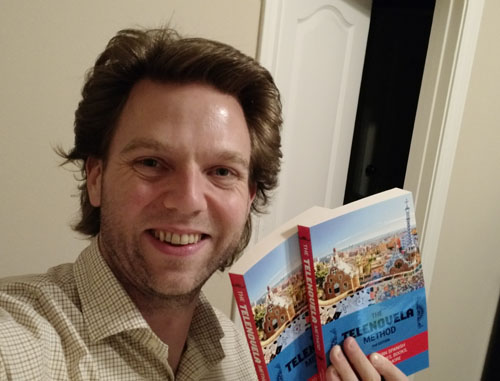
Hi, I’m Andrew (yes, that’s me on the left doing my best impression of The Rock or something) and this is my blog about how to teach yourself Spanish from home, on your own, using almost entirely free online resources such as music videos, TV shows like Telenovelas (Spanish-language soap operas), movies, etc.: it’s how I’ve been doing it for the past four years that I’ve been learning Spanish now, it’s worked better for me than any other language-learning technique I’ve tried because it’s fun and you’re using material that not only interests you but teaches you real-life Spanish as it’s actually spoken by native speakers, and I decided that I had accumulated enough knowledge and resources over the years that other people wanting to learn Spanish would maybe find some of it useful.
Learn Spanish to near-perfect fluency from home: all you need is a computer and an internet connection (plus, almost all the resources are completely free and available to you in an instant over the internet)
What I’ve put together that I’m going to teach you below I learned over a period of four years through hard, real-world, trial-and-error (lots of trying, lots of error, and every now and then a bit of success that slowly added up to something fantastic) and I’m going to:
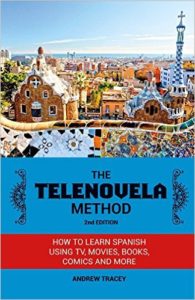
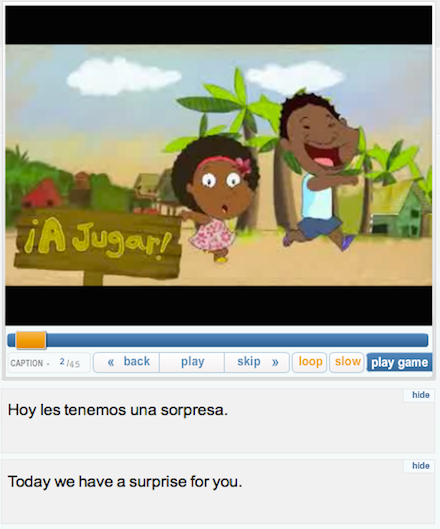
- Teach you my infamous ‘Telenovela Method’ of learning Spanish where you use modern popular media such as telenovelas (Spanish-language soap operas), music videos (one of my favorites, I’ve got several Spanish lessons on here already that are entirely based around a Shakira or Juanes music video), news broadcasts, and movies.
- What my favorite free online Spanish-learning resources are, what they do, and where to find them.
- Tell you why you can barely speak a word of Spanish after years of classes in high school and college and why it’s not your fault at all, it’s the fault of our severely outdated method of teaching languages.
- Tell you how to determine whether or not you should get a home study course, how to choose the right one for you, and what my personal experiences with them have been and what I recommend.
- How to find an unlimited supply of native speakers to practice your Spanish with, online and for free, that you can actually talk to as long as you want by using Skype (free internet telephone service). I’ll show you the websites that will set this up for you (again, they’re free), they’re called “language exchanges”, I’ll tell you what the best ones are and why, and how to use them. Let’s get started.
First of all, why should you listen to me?
Fair enough, I’m asking you to take time out of your day to read my long, blathering nonsense below, I should have to prove that I at least know what I’m talking about. I’ve had articles on language-learning published by various magazines and popular language-learning blogs, including:
- An article on my now-infamous ‘Telenovela Method’ (if you go check this out, be sure to come back: I go into a LOT more detail below on how to do this, including some essential bits that you must know for it to work) which was published here in Multilingual Living Magazine.
- An article covering my well known how-to-learn-Spanish-from-music-videos method where I illustrated the technique using Shakira’s ‘La Tortura’, which was published by Benny over at Fluent in 3 Months (who, by the way, was recently ranked #1 in Lexiophile’s annual ‘Top 100 Language Blogs’ contest).
- A short article called ‘Spots and Sleeves’, a funny story about how the ‘Canal de la Mancha’ got its name, which was published by Omniglot.
- An article written entirely in Spanish for Actualidades, a highly respected and popular Spanish educational resource designed for teachers that’s intended to be used as a teaching resource with their students which covers a bit of the background around the sayings and language used in Shakira’s ‘La Tortura’ and uses it to teach a bit of Spanish as well (people do love that song).
- An article on where to find the best Spanish resources for teachers and students that was published by IELanguages (aka ‘Jennie in France’), run by Jennifer Wagner who’s currently getting her PhD in Languages and Linguistics in Australia.
- An article on how to learn Spanish while cooking from a Spanish-language recipe, where I used a recipe for Huevos Rancheros to show you how, which was published by Randy over at Yearlyglot.
I’ve been teaching myself languages, on my own, ever since I was 12 starting with French, and over the years I’ve learned, to varying degrees, German, Swedish, Japanese, Russian, and Spanish. I took four years of French in high school (hated it, explained below), and took Russian and Spanish while at Tulane University in New Orleans. Learning languages really is my passion and I love sharing what I’ve learned with other people, and having done this for over 16 years I’ve accumulated quite a bit of knowledge on the subject–I’ve already made all the mistakes and you won’t have to if you’ll just give me a chance and listen to what I have to say.
Why those language classes didn’t make you fluent: I hated French class in high school, failed Spanish in College, and then managed to fail Russian shortly thereafter
How many of you have had years (2, 4, sometimes 6 or 8 counting high school and college together) of language classes and still aren’t even remotely close to being able to hold the simplest of conversations with a native speaker for just 5 minutes? How many other people do you know like this? Precisely. Most schools, especially in English-speaking countries like the U.S. and U.K., do a mind-numbingly poor job of teaching foreign languages–they use dry old textbooks, teach only boring formal language that native speakers rarely ever use, and emphasize reading and writing above speaking simply because their tests are almost all written and they care about their test results, not about results for you in terms of getting you to speak the language. That’s why you may have had years of classes in school and still couldn’t hold a conversation with a native speaker.
I’m a complete language nerd, I love learning new languages. When I was 12 I started teaching myself French using an old Berlitz book from the ’50s and a Pimsleur French audio course I talked my parents into getting me for my birthday (this was so long ago they were cassette tapes, not CDs) and I loved it, I relished every little bit of progress I gained each day, every new word I learned, and when I finally figured out how to do that oddball French “R” that’s sort of a dry gurgling sound in the back of the throat I was like a kid that just opened a present on Christmas morning and discovered that it was exactly what they wanted. Then I got to high school where I had my first language classes ever, and they were in my beloved French–this was when I got a dose of the nasty, hard reality that are most language classes…
You know, I USED to really love French, but
memorizing dozens of conjugation charts and vocabulary lists, doing boring exercises for homework from an outdated textbook that taught the sort of French no native speaker would ever use in real life, and almost never, ever actually speaking any, you know, French very quickly put an end to that. I somehow plowed my way through four years of that and managed ‘A’s and ‘B’s, but it really turned me off to language-learning for a while.
I tried Russian in college (you were required to take 4 semesters of a language to graduate) and had the same experience and hated it, which resulted in me rarely doing the homework and simply not being able to pay attention, I just couldn’t learn that way. I have a confession, I told a little white lie above: I didn’t fail Russian per se, I got a D- (the lowest grade above failing, which is an ‘F’, for our non-American readers) only because the professor had a policy of never failing anyone if they came to class, but believe me, I knew my test scores, I failed by any quantifiable measure.
I know, I’ll take Spanish, it’s supposed to be easy, plus the teacher’s really hot (and a native speaker to boot)!
A gorgeous, and very nice, young Costa Rican lady was our instructor and she began the course with the sort of enthusiasm that only a novice teacher could: she quickly learned that, despite how she’d like to teach the course, the university required her to teach from the textbook provided and with the method dictated by the language department. This, of course, ruined the class and turned it into just another dull exercise in how-many-words-can-you-memorize like every other language class. I literally watched that poor woman degrade over the weeks to utter resignation and soul-crushing defeat due to the way she was forced to teach and, in particular, the predictably unenthusiastic attitude of the class in response. I dropped it after a month and a half, too late for it not to count, and received an ‘F’.
Look, this is my PASSION and here’s WHY (and probably why a lot of you are here)
I have always wanted to travel extensively and not just travel, but actually live (as in, for years at a time) in other countries–you see, I really don’t believe that you can learn very much about another culture, country, and people simply by visiting them as a tourist for a couple of weeks, and it’s even worse if you can’t speak their language. That’s ultimately what really fascinates me, it’s my passion: learning about other cultures and people who are different from me. I could literally spend the rest of my life moving from country to country every 3-5 years and picking up, ooohhh, say a dozen or so languages along the way.
This brings me to my point about languages: you can not truly understand a people and their culture without speaking their language. Just forget it: if you’re not willing to learn to speak to them in their native tongue, you’ll never really “get” them, I don’t care what else you do. You have to go to their country, actually live there for, at the very least, 6 months or a year, and actually be conversationally fluent in their language before you hit the ground there. This means you’ve got to get fluent on your own, without immersing yourself in-country. Before, without having a local friend who was a native speaker, this would have been nearly impossible. But now we have…THE INTERNET!
It was a few years after college that I finally scratched the itch I’d always had (I’ve always wanted to be able to speak multiple languages, that desire never left me, it was just some disillusionment there in the middle with how languages are taught in school that temporarily put a hold on things), I decided that since I wanted so much to travel and that I’d probably start with Latin America, I would absolutely, completely, and utterly commit myself to becoming fluent in Spanish: 3 hours a day of study every day, NO let up, I’ll try everything and figure out what works, then I’ll streamline it and apply it to other languages I want to learn. A deep-seated drive to accomplish what was absolutely necessary for me to be able to do what I truly wanted with my life (travel) along with my passion for languages guided me straight to my goal: I was fluent in 6 months.
You likely have very little idea of all the various resources out there that can help you learn even the most obscure language, let alone how to properly integrate them all into a system that you can use at home to effectively teach yourself to be conversationally fluent in any language you want. This is where I come in: I love this stuff, it’s my passion, I don’t even consider learning a new language “work”, and I’ve been teaching myself Spanish for the last 3 1/2 years, plus some Swedish and then Japanese for a while recently, and then French for the past few months. I’ve amassed a great deal of knowledge about how to do this–not just learn Spanish (though I do know a lot of specific information about that, as opposed to any other language), but how to learn any language on your own.
The Internet’s Top 33 Free Spanish-learning resources, my favorite language exchanges and Spanish chat rooms, and more…
First of all, very important, I’ve got a ton of stuff below this where I cover the Telenovela Method, learning Spanish from music videos, the most common gringo errors, basic manners in Spanish, and much, MUCH more, so if you’re not interested in what I have to say here, please feel free to just skip right past it to all the goodies below, I know some people will see this and say “blah, I don’t want to do that” and think this is the end and then just leave because they think I’m not going to deliver what I promised above: no, I am, but it’s below, so skip this part if you’re not interested.
Now, I’ve spent a great deal of time putting together a 3-part series of articles for you on the internet’s best free resources for the Spanish-learner that you’ll get when you sign up for my newsletter–in addition to all of what you get below, I’ll be sure to send you any updates about cool new sites, resources, and learning tips and techniques that I come up with (I’m currently putting together a whole series that will teach you in great detail precisely how I go about learning a new language):
Part 1: A very long list of my favorite Top 33 free online Spanish-learning resources (tools, references, sites with free lessons, articles, blogs, forums, etc.) that’s far to long to include here, especially with all the other stuff I’ve got below that’s just on this site alone, and I’d like to offer it to you (completely free, you don’t have to do anything other than sign up) right now.
Part 2: I explain what language exchanges are (essentially they allow you free access to an unlimited number of native speakers to practice your Spanish with), why they’re absolutely essential if you’re teaching yourself (I’m serious when I say this: it’s impossible to get fluent without them if you’re learning a foreign language on your own), how to use them, and which ones are the best.
Part 3: I cover chat rooms which are specifically devoted to connecting you with native Spanish speakers who want to learn English so you can chat with them in Spanish (and they’ll help and correct you) and then you do the same for them with their English (these are completely free to use, but rather hard to find, but I’ll tell you where the best ones are!). Sign up below!
If you’re still not sure if you want to sign up or not, go here to learn more and see a sample of 5 excellent resources that I’ve taken from the list and posted on my site so you can see what sort of things are on there and how I explain what they are and how they work for you.
Using music and music videos to learn Spanish: SO much fun!
Ok, my most popular posts by far, that this blog has kind of become famous for, are the Shakira posts: that is, I take a music video (mostly Shakira so far, though I’ve also done a Juanes one and will do ones by many different artists in the future) and completely dissect it. What this means is that I put a full translation up next to the lyrics and then explain all the Spanish that’s going on, the grammar, vocabulary, idioms, slang, expressions, little colloquial things specific only to a certain regional dialect of Spanish (such as Shakira’s Costeña/Barranquilla style), etc. These posts are very long and detailed and you can learn a TON of Spanish from them, here are the ones I’ve done so far, I highly, highly recommend you check these out:
Learning Spanish from Music Videos: Shakira’s ‘La Tortura’ Dissected
Learning Spanish From Music Videos: Shakira’s ‘Suerte’
Learning Spanish from Music Videos: Shakira’s “Ojos Así”
Learning Spanish from Music Videos: Shakira’s ‘Te Aviso, Te Anuncio’ aka ‘Objection (Tango)’
Learning Spanish from Music Videos: Juanes’ ‘Yerbatero’ Dissected
I’m currently working on another Shakira song, and that post should be up in a week or two, and there will be many more after that including other Spanish-language artists, so if this interests you and you’d like to know when new ones come out, be sure to subscribe to my RSS feed (click me!).
Movies and TV!
I wrote up an entire post dedicated to how to use Spanish-language TV shows and movies to learn Spanish that I mentioned before called: The Telenovela Method of Learning Spanish, plus I put together the most comprehensive and accurate (no dead links! unlike every other list I checked…) list of websites where you can watch streaming Spanish-language TV online for free here: List of Best Free Sites to Watch Spanish-Language TV Online.
I can’t possibly tell you how valuable listening to real, contemporary Spanish-language media like music, movies, and TV shows are. It gives you insight into the culture and how the language is actually used by real native speakers right now, today. If you want to be able to communicate with real people using Spanish, this sort of stuff is one of your best possible learning resources. A related post that delves a bit more into why exactly it works so well you can see here: Why Listening is SO Important – Even If You Don’t Understand a Word!
Learning to Sound Like a Native
I’ve done several very comprehensive (read: long, but good) posts about all the little sayings, phrases, and words that natives will use in everyday speech that you’ll never learn in a textbook, such as:
How to Respond in Spanish Like a Native: Comebacks and Colloquial Responses
Spanish Sentence Starters and Filler Words (Muletillas): The Grease of the Language Gears
Manners in Spanish – The Basics of Being Polite in Spanish-Speaking Cultures
How to Not Sound Like a Gringo – The 17 Most Common Spanish Errors and How to Avoid Them
My Favorite, and Most Common, Gringo Error in Spanish (aka “false friend”)
Grammar, Syntax, and Learning Vocabulary
I don’t do too much with this since I’m not a big advocate of learning a lot of formal grammar or doing a whole lot of vocabulary memorization, but it is something that does need to be covered to some degree, and I especially recommend the first post below about how many words you really ‘need’ to know to be proficient in a language:
The Beautiful Simplicity of Spanish Verbs in Chart Form
Some quick advice on using Anki
How Much Grammar and Syntax Terminology Do I Need to Know?
What Should You Start With? Grammar, Vocabulary, Basic Expressions, Everything?!!
General Language-Learning Advice, Tips, and Techniques
Below I just cover some general advice on teaching yourself a language such as motivation, how to structure things, how long to study, some various learning techniques, etc.:
What’s the Hardest Part? Speaking, Listening, Reading, or Writing? Where to Start?
A Quick Tip on Learning a Language In-Country
How Long Should I Study Every Day? How to Schedule It?
Linear vs. Global Learning – What’s Your Style?
The Scriptorium Method by Professor Arguelles
What Does It Mean to Be Fluent in a Language? Fluency Levels Don’t Really Exist
Why Listening is SO Important – Even If You Don’t Understand a Word!
Motivation: You Don’t Need a Shark, But You Do Need Something
Fascinating Interview with an Italian Polyglot
Weird, Goofy, Funny, and Miscellaneous
Below are just some posts I’ve made about interesting observations and realizations I’ve had concerning language-learning in general, plus some oddball stuff about Spanish in particular:
President Obama Wants You to Learn Spanish (short video)
The Top 22 Ways You Know You’re a Language Nerd…
English Channel = Canal de la Mancha = “Canal of the spot” = Funny Story
Funny Search Phrases that Brought People to My Site
To Have a Second Language is to Have a Second Soul
Conclusion
Ok, well that’s it, those are just about all the posts I’ve ever done. If you like what you see here please consider subscribing to my newsletter (click here to get a free glimpse of what’s on the list!) I mentioned at the beginning (you get so much awesome free stuff, right away!!), my RSS feed, and/or my Twitter feed. THANK YOU, seriously, for taking the time to read this (I imagine it took at least 30 minutes out of your day), I really hope that I’ve helped you towards your goal of learning Spanish–learning languages is something I’m more passionate and enthusiastic about than nearly anything else, and I really love it when someone else feels the same way and especially when I can help them.
Cheers,
Andrew
Subscribe to My Feed