My Favorite, and Most Common, Gringo Error in Spanish (aka “false friend”)
Embarazada. Ohhh how much you look like “embarrassed”, embarazada. Any English-speaker would look at that word and immediately, and for obvious and perfectly logical reasons, guess that it means “embarrassed”. Most times if a Spanish word looks very similar to an English word that you know, it does, in fact, mean either precisely the same thing as that word or something very similar! Examples abound: alfabeto (alphabet), gracia (grace), huracán (hurricane), chocolate (chocolate), adorar (to adore), dividir (to divide), and on and on and on (see a longer list here).
Why did those Spaniards have to try to trick us poor, helpless gringos with words like these? Was it because they were just in a nasty mood that day? Did they eat some rotten paella? Perhaps they just wanted to ensure endless amusement for their fellow Spanish-speakers for centuries to come at the expense of hapless English-speakers attempting to learn their language.
You have no idea how entertaining it is for native Spanish-speakers to hear a middle-aged white guy from Texas say “¡Oy! ¡Estoy tan embarazado!” Really??! Well…congratulations! When are you due??
Because…
Embarazada (normally only ever embarazada for reasons that will be obvious to you in a second) means…pregnant! Hey, now you’ve definitely got something to be embarrassed about!
The common way of expressing embarrassment is with the word vergüenza, which means “embarrassment” or, literally, “shame” (it’s a noun). The way this is done is to say that something gives you or someone else shame, for example:
“I’m so embarrassed!” = “¡Me da tanta vergüenza!” which literally translates to “It gives me such shame!”
You could also say that you “feel” embarrassed by using “sentir vergüenza”, or “to feel shame” in the following manner:
“I feel embarrassed to tell you.” = “Me siento vergüenza decirtelo.”
That concludes our short Spanish lesson for today, I hope this prevents you from ever accidentally telling someone that you’re going to give birth, and that it leads to endless amusement for you when other English-speakers do
Cheers,
Andrew
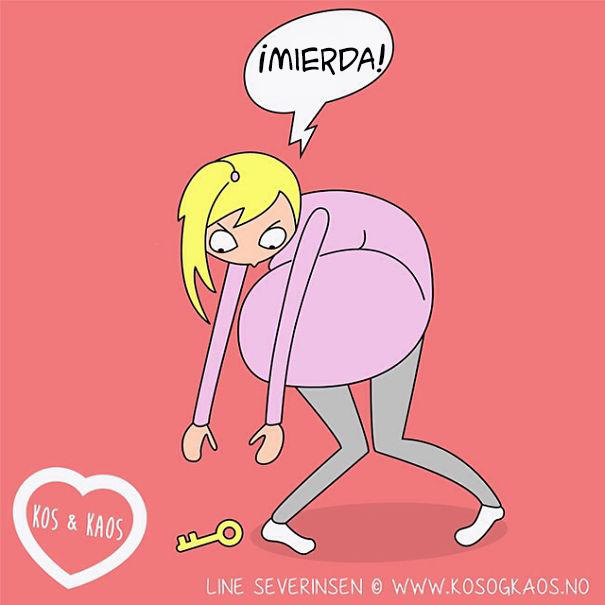
P.S. I just found this, perhaps the only possible correct use of the word “embarazado” EVER, lol:
The secrets of how to use free online resources to teach yourself Spanish, from home, in just a few months - Also: Here are the internet's Top 33 free online Spanish-learning resources
I run a newsletter entirely about how to learn Spanish online for free where I send out every cool new tip and technique that I learn to my subscribers and not only do they get it before anyone else but frequently they get things that no one else ever does. Additionally, I've spent a great deal of time putting together a 3-part series of articles for you on the internet's best free resources for the Spanish-learner that you'll get when you sign up for my newsletter--in addition to all of what you get below, I'll be sure to send you any updates about cool new sites, resources, and learning tips and techniques that I come up with:Part 1: An article called “Spanish Learning Systems: Should you bother?” about whether or not you should even bother with a pre-packaged Spanish-learning system (e.g. Rosetta Stone or Pimsleur) and, if you do decide you want to, where you can go online to find programs that are literally 1/10th the price of older, more common systems like Rosetta Stone and Pimsleur but actually work even better. Also, at the same time, you’ll get a separate e-mail with a very long list of my favorite Top 33 free online Spanish-learning resources (tools, references, sites with free lessons, articles, blogs, forums, etc.) that's far to long to include here, especially with all the other stuff I've got below that's just on this site alone, and I'd like to offer it to you (completely free, you don't have to do anything other than sign up) right now.
Part 2: I explain what language exchanges are (essentially they allow you free access to an unlimited number of native speakers to practice your Spanish with), why they're absolutely essential if you're teaching yourself (I'm serious when I say this: it's impossible to get fluent without them if you're learning a foreign language on your own), how to use them, and which ones are the best.
Part 3: I cover chat rooms which are specifically devoted to connecting you with native Spanish speakers who want to learn English so you can chat with them in Spanish (and they'll help and correct you) and then you do the same for them with their English (these are completely free to use, but rather hard to find, but I'll tell you where the best ones are!). Sign up below!
Also, if you like what you see here PLEASE SUBSCRIBE to my Twitter feed and/or RSS feed so you can be updated any time there’s a new post.
Cheers,
Andrew
Subscribe to My Feed
Pingback: Spanish Sentence Starters and Filler Words (Muletillas): The Grease of the Language Gears